PLANETARY INTELLIGENCE, IN DEVELOPMENT

Observations
are not
understanding.

AstraSense develops evidence-aware planetary intelligence: connecting observations, context and reasoning so people can investigate change and decide what to examine next.

Early access enquiries open an email draft. Explore the Concept opens an authored browser illustration.

THE LIVING OBSERVATORY AN EXPLORATION IN UNDERSTANDING

THE ASTRA FIELDA structure that changes with evidence.↗
INSPECT EARTH
CONCEPTUAL VISUALISATION

DISCOVERY LAB / EVIDENCE REVISION · ILLUSTRATIVE

Understanding changes.

Introduce another observation.
Watch the interpretation move.

Open the full investigation

01 / AVAILABLE EVIDENCE

OPEN CONNECTIONS / ONE SOURCE

ILLUSTRATIVE SCENARIO

One observation is not a conclusion.

The thermal cue is a measurement category, not proof of a wildfire.

Intelligence is not the absence of uncertainty. It is the disciplined handling of it.

An observation becomes more useful when its source, historical context, uncertainty and earlier interpretations remain open to inspection. New evidence may reinforce or challenge a judgement; preserving that change is an AstraSense research principle. Explore cognition and knowledge ↗

Observation: what a source recordsInference: a possible explanationUncertainty: what remains openAuthored scenario · no live data or model execution
Listening options

Original synthesis. Tones identify illustrative sources, never certainty.

How to listen

Sound is optional and off.

Listening to evidence · an illustrative sound key

Sound is off by default. Enable it above to hear a short phrase when you change the available evidence. The first source has a soft left-positioned tone; the second adds a distinct right-positioned tone. Challenging context arrives after a longer gap. Removing evidence replays only the remaining source tones.

Pitch identifies sources. Spacing represents reconsideration. Neither harmony nor volume measures confidence, truth or scientific certainty. These are original interface sounds, not recordings from space or model outputs. An optional atmospheric layer is independent of the evidence.

Read about accountability and uncertainty ↗
02 / OBSERVATION

More observations do not automatically
mean better understanding.

Different signals.
Different blind spots.

Images. Measurements. Histories. Each reveals something. None tells the whole story.

AstraSense is developing an architecture that connects these fragments—preserving where they came from, what they suggest and what they cannot yet tell us.

See how different signals connect ↗

THE ASTRA FIELD / A PUBLIC INTRODUCTION

A signal becomes a question.
Evidence changes the answer.

Sources provide partial observations. The Astra perspectives help frame an assessment. An authorised person decides what follows. Explore the relationship through four questions.

WHAT WAS MEASURED?

Begin with what can be observed.

Optical, radar, thermal, in-situ and other signals reveal different aspects of a changing world. Each has limits of coverage, timing and interpretation.

Illustrative example: a heat anomaly is a measurement cue. Its cause remains unknown.

Explore different observations ↗

WHAT MIGHT IT MEAN?

Bring complementary perspectives.

Vision explores imagery. Temporal considers change through time. Spatial adds location and context. Atoms considers physical meaning. Reason brings interpretations and open questions into view.

Explore how five complementary perspectives can shape the questions in an investigation.

Explore the five perspectives ↗

WHAT SUPPORTS THE INTERPRETATION?

Keep support and uncertainty visible.

A useful assessment distinguishes observations from interpretations, identifies sources and makes unanswered questions clear. New information can strengthen an explanation or challenge it.

Illustrative example: a second observation adds context; a conflicting report reopens the question.

Change the available evidence ↗

WHAT SHOULD A PERSON CONSIDER?

Understanding supports human judgement.

People consider the assessment, its limitations and whether further observation is needed. Consequential decisions remain with authorised humans.

This demonstration produces no operational recommendation or autonomous action.

Bring a question or mission ↗

Sources → intelligence → human authority. This is a public illustration of an investigation, not a deployed system diagram.

THE ASTRA DISCOVERY LAB

Small experiments.
Consequential distinctions.

Change the view. Compare a moment. Reconsider an explanation.
Three ways to discover what an observation can—and cannot—tell us. Each experiment stands alone. Start with any question.

01 / OBSERVATION

Can a satellite see
through clouds?

The answer depends on the instrument.
Switch the measurement, not the weather.

Cloud hides the surface in this optical view.

A visible-light image records reflected sunlight. In this cloudy scene, the land below cannot be inspected.

An obscured surface is missing information, not evidence that nothing changed.

The landscape and cloud are original diagrams. Radar shading is schematic; no pixel values, acquisition or water classification are implied.

What radar contributes—and what remains uncertain

Sentinel-1 supplies its own microwave illumination. Its C-band measurement can reach the surface through cloud and does not require daylight. The return is radar backscatter, not visible colour. Surface roughness, moisture and geometry can affect the return, so the same shading can have several explanations. A real comparison needs calibrated data, acquisition metadata and appropriate processing.

Scientific sources: ESA · Sentinel-1 instrument ↗; NASA · Sentinel-1 soil-moisture limitations ↗; NASA · Understanding SAR geometry ↗.

02 / INTERPRETATION

When does change
become evidence?

Reveal a later view of the same illustrative landscape. Something looks different. Do we know why?

Initial observation only.

Vision · What changed visually?

The later illustration contains a less green area. Detecting a visible difference does not identify its cause.

Two authored illustrations, not acquired imagery or a calculated vegetation index. The control reveals a difference; it does not run a model.

Beyond the visible difference

NDVI compares reflected near-infrared and red light: NDVI=NIR−RedNIR+Red. A lower value alone does not diagnose a cause: clouds, seasonal conditions and soil background can matter. Two observations need comparable acquisition conditions and a useful time baseline. The capability contributions here are conceptual explanations, not validated model outputs.

Scientific source: NASA Earth Observatory · Measuring vegetation ↗; USGS · NDVI definition ↗. Read the public guide to contextualised information →

Why can two sensors disagree?

Different signals.
One coherent understanding.

Optical. Radar. Thermal. Ground sensors. Records.
Each has its own strengths, blind spots and history.
The architecture is designed to preserve them.

TRY IT / WHAT IF TWO SENSORS DISAGREE?

Toggle a source to explore how the assessment changes.
Fictional inputs · no confidence scores.

Source identity retainedTimes preservedIndependence unknown

03 / INTERPRETATION

FIVE COMPLEMENTARY PERSPECTIVES

Five perspectives.
One connected intelligence.

Different questions demand different ways of seeing.
Explore how the Astra capability families contribute
to a shared investigation.

REASON
SHARED ASSESSMENT

FOUR CONTRIBUTIONS. ONE REVISABLE ASSESSMENT.

01 / VISUAL PERCEPTION

Astra Vision

Find features and changes in imagery, while keeping the observation separate from its interpretation.

THE CONNECTIVE TISSUE
Knowledge continuity

A source, time and place give an observation its context. Keeping earlier observations, assessments and corrections available lets an investigator inspect how a judgement changed. This history informs the questions explored under Astra Cognition; storage alone does not establish meaning.

Cognition & World Models

Astra Cognition explores how historical context might inform a new interpretation. The physical World is the environment we observe; a proposed computational World Model would represent selected relationships across space, time and physical context. Both are research directions. This authored field illustrates the questions rather than executing a computational model.

Coordinated intelligence

Where questions need different expertise, a proposed coordinating role, or Meta-Agent, could request work from authorised specialist capabilities. Their sources, results and disagreements would need to remain reviewable under human authority. The Agent2Agent protocol describes agent-to-agent exchange; the Model Context Protocol addresses access to tools and data. They are interoperability references, not claims of AstraSense protocol compliance.

Human authority

People should set objectives and authority limits, supervise any delegated work, inspect evidence and assessments, and decide when to intervene or stop. Conclusions can be corrected or revised; control should return to authorised people where feasible. A physical consequence cannot always be undone. Emergency autonomy remains a governance research question, not a capability shown here.

04 / REASON

ILLUSTRATIVE SIMULATION · NOT LIVE DATA

From signal
to understanding.

A single observation is the start of a question.
Follow the evidence. Inspect the uncertainty.
See what changes the assessment.

RIVER LANDSCAPESCHEMATIC / NOT A MAP
N ↑
Evidence location Area to investigate
Fictional scene and relative times. No scientific measurements.
01 / 06

WHAT REMAINS UNKNOWN

OPEN THE EVIDENCE

Every interpretation needs a traceable source.

Illustrative investigation: authored records with relative times. No external observations or AstraSense model results are shown.

05 / QUESTIONS WORTH ASKING

Built around problems. Open to different worlds.

Where understanding
makes a difference.

06 / MISSION

From the observation problem to the decision workflow.

Bring us a problem.
Not just a dataset.

Explore a mission-to-decision workflow.
Explore a path from your requirements to an
integrated observation and intelligence workflow.

01 / QUESTIONWhat do you
need to understand?
02 / REQUIREMENTSWhat needs
to be observed?
03 / OPTIONSExisting signals,
sensors & suppliers
04 / INTELLIGENCEEvidence-aware
interpretation
05 / HUMAN AUTHORITYAn informed
human decision

PATHWAY 01

Intelligence
integration

You have the data and the systems. We explore how evidence-aware intelligence could fit into your environment.

  • Existing data sources and workflows
  • Integration and evidence requirements
  • Scoped evaluation criteria
Connect your capabilities ↗

PATHWAY 02

Mission intelligence
solutions

You need a connected workflow. We explore the observation, processing and decision systems around your question.

  • Multi-source observation strategy
  • Supplier and system evaluation
  • Human decision workflows
Shape your solution ↗

PATHWAY 03

End-to-end
mission development

Start with the mission itself. Explore platforms, payloads, communications and ground expertise through qualified providers.

  • Requirements and feasibility
  • Complementary ecosystem capabilities
  • Mission-to-intelligence architecture
Discuss a mission ↗

Engagements are subject to technical feasibility, validation and commercial agreement. Space and ground infrastructure may be supplied by qualified third parties. No satellite ownership, manufacturing capability or supplier partnership is implied.

07 / BEYOND EARTH

RESEARCH / FUTURE VISION

Intelligence should
not stop at Earth’s
atmosphere.

The physics changes. The need for evidence does not.
Explore how the architectural principles could extend
to other worlds.

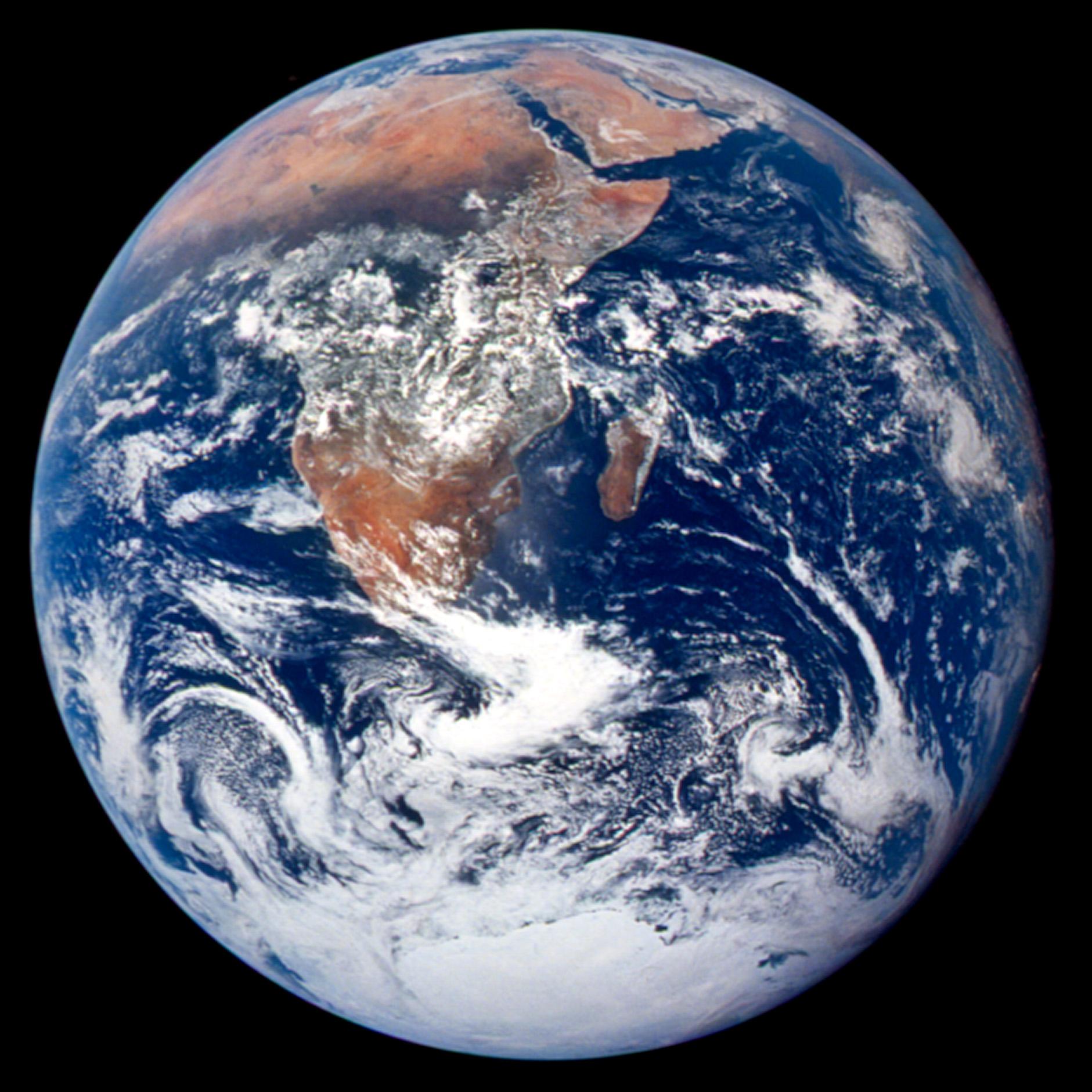
Earth photographed by the Apollo 17 crew in December 1972
01 / EARTH
Apollo 17 photograph · 7 December 1972 NASA source ↗

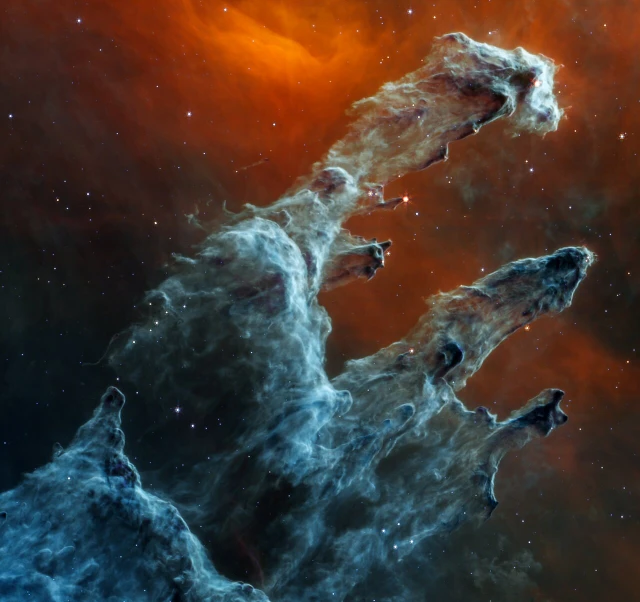
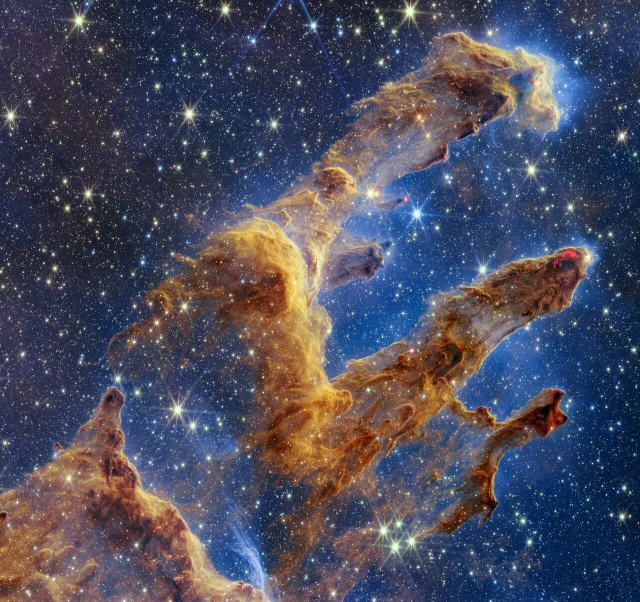
Beyond Earth: two Webb views of the Pillars of Creation ↗

08 / RESEARCH & PUBLICATIONS

Explore Research & Publications

Research & Publications

Exploring the scientific, technological and governance foundations of planetary intelligence.

Field Notes

01What can radar see through a cloud?+

Imaging radar sends microwave signals and measures their return. At commonly used SAR wavelengths, cloud cover is much less obstructive than it is for visible light. Radar also supplies its own illumination. Its images describe radar scattering—not an optical view through the clouds.

Read the ESA explanation ↗
02Greener does not always mean healthier.+

NDVI compares reflected near-infrared and red light. It can help describe vegetation greenness, but a change in the index does not by itself identify a cause. Season, soil, atmosphere and acquisition conditions matter. It is not a standalone diagnosis of plant health.

Explore NASA’s vegetation guide ↗
03When “insufficient evidence” is the useful answer.+

An observation is a recorded signal. An inference is an interpretation of what that signal may mean. If several explanations fit the same observation, choosing one too early hides uncertainty. A useful system makes the gap visible and identifies which further observation could help distinguish the alternatives.

Try the sensor disagreement example →
04Two signals. One cause?+

Two changes occurring together do not establish that one caused the other. They may share a cause, coincide by chance or derive from the same underlying source. Spatial context and temporal persistence can guide an investigation; neither automatically proves causation or independence.

Inspect an infrastructure scenario →
05Why keep the assessment that turned out to be wrong?+

Explaining what changed helps a reader understand why an earlier assessment was reasonable and why it was later weakened. Sources, assumptions and remaining uncertainty are useful context for that explanation.

Explore an assessment revision →

Explore the Evidence Atlas ↗

EVENTS & ENGAGEMENTS

Meet us in Bremen and Santiago.

At two gatherings this November, we are bringing the same question: what do we need to observe to understand a changing world?

AstraSense × VR Parallax | Santiago 2026

We’re bringing Earth into the room.

This November in Santiago, AstraSense and VR Parallax are preparing an immersive augmented-reality experience for Americas Space Forum 2026.

AstraSense
VR Parallax
Earth before your eyes
Explore a spatial view of Earth and how observations change across places and over time.
Evidence in context
See how Astra Vision, Temporal, Spatial, Atoms and Reason can frame an investigation.
Beyond observation
See how historical knowledge informs the research vision behind Astra Cognition and World Models.
Space Tech Expo Europe logo

2026 EVENT · BREMEN, GERMANY

Space Tech Expo Europe

17–19 November 2026

A mission begins with what we need to understand. In Bremen, we will discuss how observation needs shape space technology and useful intelligence.

Explore the event
NOVEMBER · DECEMBER 2026 Americas Space Forum 2026 logo SANTIAGO CHILE

2026 EVENT · SANTIAGO, CHILE

Americas Space Forum

Platinum Partner · Americas Space Forum 2026

30 November–1 December 2026

In Santiago, we will explore how evidence, context and human judgement can turn planetary observations into better questions and decisions.

Explore AstraSense at the Forum Explore the event
Start a conversation

THE ASTRASENSE PRINCIPLE

Intelligence informs.
Humanity decides.

We are developing the layer between planetary observation and accountable understanding. Signal-agnostic by design. Evidence-aware in its ambition. Human-governed in its purpose.

Our five Astra perspectives frame the questions behind a changing world: what we observe, what context adds, what the evidence supports and what people should investigate next.

About the organisation
Website interactions: implemented Astra architecture: research and evaluation Beyond Earth: future vision

09 / THE NEXT QUESTION STARTS WITH YOU

What do you
need to understand?

A mission concept. A difficult dataset. A research question.
Let’s explore what the evidence could make possible.

info@astrasense.space ↗

Opens your email app with a draft. Nothing is submitted or stored by this website.

How enquiries are handled: Privacy notice.